
















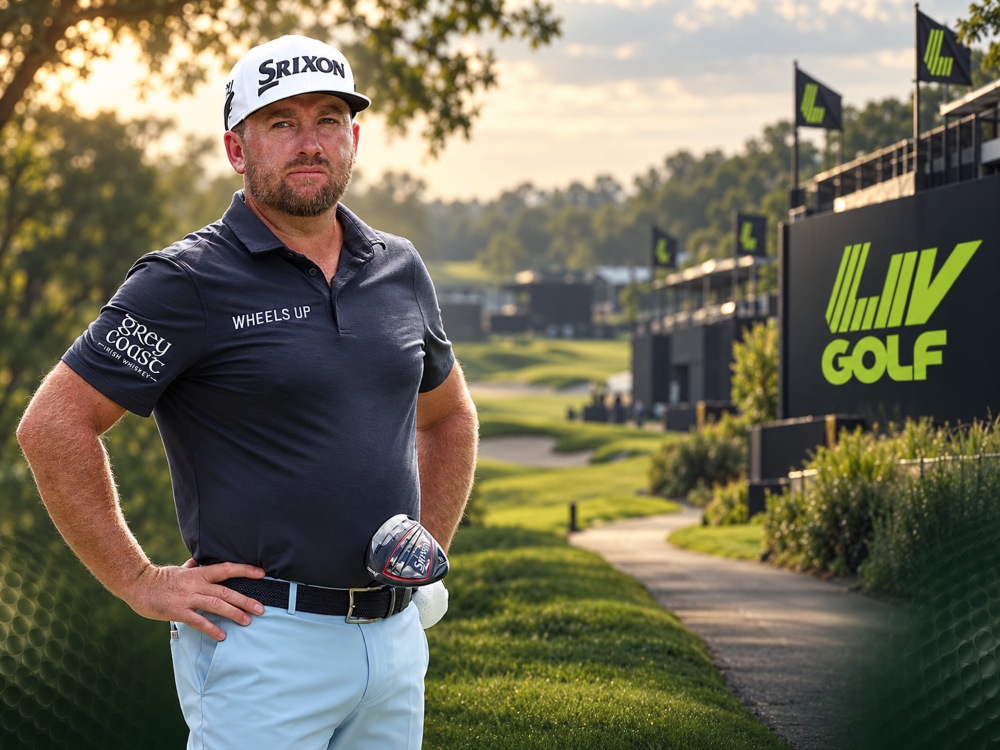
Northern Ireland’s Graeme McDowell has become the latest major champion to walk away from LIV Golf, adding another significant name to the growing list of players rejecting the proposed LIV 2.0 relaunch.
The 2010 US Open champion confirmed he will not continue with the breakaway circuit after four seasons.
“I’ve decided not to pursue LIV 2.0,” McDowell said.
“I’m grateful for the opportunity I’ve had over the last four years and want to thank everyone who has been part of that journey.

“I look forward to the next chapter of my career.”
McDowell has not yet revealed where that next chapter will take him, but his decision follows a string of notable departures as LIV attempts to assemble enough players for a substantially reworked 2027 competition.
Big Names Continue To Leave LIV
Spain’s Jon Rahm has reached a separation agreement with LIV after rejecting the proposed new terms, while England’s Tyrrell Hatton and Ian Poulter have also confirmed they will not participate in LIV 2.0.
South Africa’s Louis Oosthuizen has opted to leave, along with Australian Lucas Herbert, Tom McKibbin, Branden Grace, David Puig, Abraham Ancer and Adrian Meronk among others.
Sergio Garcia has also ended his existing agreement.
The departures have left LIV fighting to build a commercially viable roster for its proposed relaunch following the withdrawal of Saudi Arabia’s Public Investment Fund as its long-term financial backer and the league’s subsequent Chapter 11 bankruptcy filing.
Private equity group BC Partners Credit has proposed investing up to US$300 million in LIV 2.0.
The original October 25 player commitment deadline has now passed, with around 15 golfers reportedly giving tentative commitments to the new model.
That has provided enough encouragement for negotiations to continue, but BC Partners is understood to be seeking a starting roster of approximately 30 to 40 players.
An October 30 deadline linked to the PIF’s bankruptcy financing now looms as another crucial date in determining whether LIV 2.0 proceeds.
DP World Tour Forces Players To Choose
The DP World Tour has added another major consideration for anyone contemplating the new LIV model.
From 2027, players competing on LIV will no longer be permitted to simultaneously hold DP World Tour membership.
Chief executive Guy Kinnings has made the tour’s position clear: golfers must choose which circuit they intend to support.
That change also has significant implications for European Ryder Cup hopefuls.
DP World Tour membership remains a requirement for Team Europe eligibility, meaning players committing to LIV 2.0 would also give up the opportunity to represent Europe at Adare Manor in 2027.
For players such as Hatton, who remains firmly in the Ryder Cup picture, that provides a powerful incentive to return full-time to the established circuit.
DP World Tour members considering their 2027 options have until November 16 to disclose their intentions.
Cameron Young Nearly Joined LIV In 2022
Meanwhile, LIV’s bankruptcy proceedings have produced a fascinating revelation involving one player who never actually made the move.
Court filings show that American world No. 4 Cameron Young signed an intent to join LIV following the 2022 Open Championship at St Andrews.
Young had finished runner-up to Australian Cameron Smith at The Open and was one of the brightest emerging talents in American golf.
He ultimately changed course.
After the 2022 Tour Championship, Young publicly confirmed he had considered LIV but decided to remain with the PGA Tour, citing his desire to compete in major championships and team events.
The decision looks increasingly significant four years later.
Young has since established himself among the world’s leading players while LIV is now attempting to persuade its existing stars to remain through a completely different financial model.
LIV 2.0 Still Fighting For Survival
The growing list of departures does not necessarily mean LIV 2.0 is finished.
Around 15 tentative commitments provide a potential foundation, while negotiations with several other players remain ongoing.
But the challenge is clear.
The original LIV proposition was built around enormous guaranteed contracts funded by the PIF. The proposed replacement relies much more heavily on player equity, signing incentives and belief in the future value of the competition.
Players must now weigh that proposition against access to the DP World Tour, potential Ryder Cup eligibility and pathways back towards the PGA Tour.
McDowell is simply the latest to decide his future lies elsewhere.
Whether enough others reach the opposite conclusion will determine whether LIV Golf has a second chapter at all.