












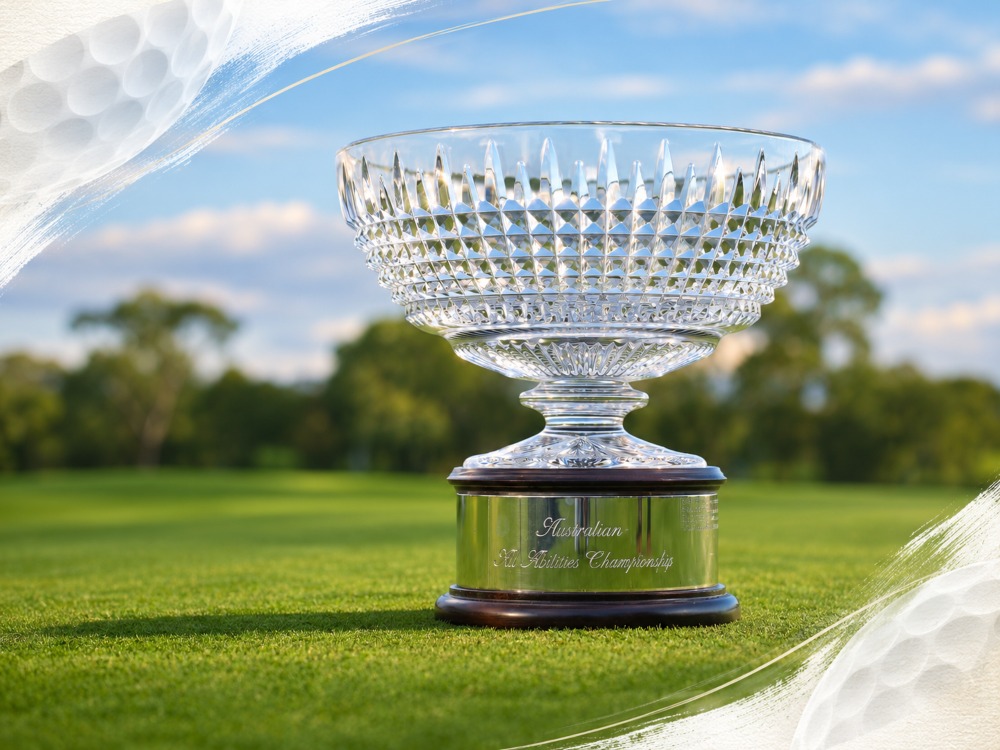
The championship runs till the 13th of November at Sandhurst Club, with 43 athletes competing over 54 holes on the North Course.
It is the first International Golf Federation event to operate under the organisation’s newly published classification rules for golfers with a disability, adding another important layer to golf’s long-term ambition of joining the Paralympic programme.
World-Class Field At Sandhurst
The field includes several of the leading players in international all-abilities golf.


England’s Kipp Popert, South Korea’s Simon Seungmin Lee, Australia’s Lachlan Wood and Ireland’s Brendan Lawlor are all ranked inside the world’s top 10 for golfers with a disability.
South Korea’s Jeongwon Han and Hong Kong’s Coco Tsoi are among the women competing.
Players will contest men’s, women’s and combined sport-class honours, with four different tee complexes used across the course to accommodate the championship’s competition classes.
How Classification Works
The new system groups athletes according to how their impairment affects the fundamental activities required to play golf.
Eight sport classes cover seated and standing players, along with golfers with vision or intellectual impairments.
The process includes confirming an underlying health condition, assessing an eligible impairment, determining whether minimum impairment criteria are met and then assigning an athlete a sport class and status.
Importantly, classification is not based simply on scoring ability.
A golfer does not move into a different class because their handicap falls or their results improve. The assessment focuses on how an impairment affects golf-specific activities.
That distinction is central to creating a consistent international framework.
Paralympic Decision Still To Come
The IGF published the new rules in October following three years of development, aligning them with the International Paralympic Committee’s 2025 Classification Code.
The system forms part of golf’s wider ambition to earn inclusion at the Brisbane 2032 Paralympic Games.
That place has not been secured.
The IPC confirmed on 10 November that its governing board will decide the Brisbane Paralympic sports programme in 2027, later than previously expected.
No sport is guaranteed a position, with factors including venue requirements, cost and the impact on organisers to be considered.
Why It Matters For New Zealand
For New Zealand’s aspiring international all-abilities golfers, the development is worth following closely.
A consistent classification structure has the potential to make international eligibility and competition pathways clearer across countries.
Sandhurst offers an early look at how that framework works in practice at championship level.
The wider Paralympic decision remains ahead, but the Australian All Abilities Open represents another tangible step towards building the international structure golf will need if it is to make that ambition a reality.